February 18, 2026
This post is part of a series: #HerStoryOurStory: Inscribed
....'and with the setting into motion of the Dhamma wheel, "an immeasurable splendor appeared throughout he world, surpassing that of the devas"'...
DESCRIPTION OF THE INSCRIPTION
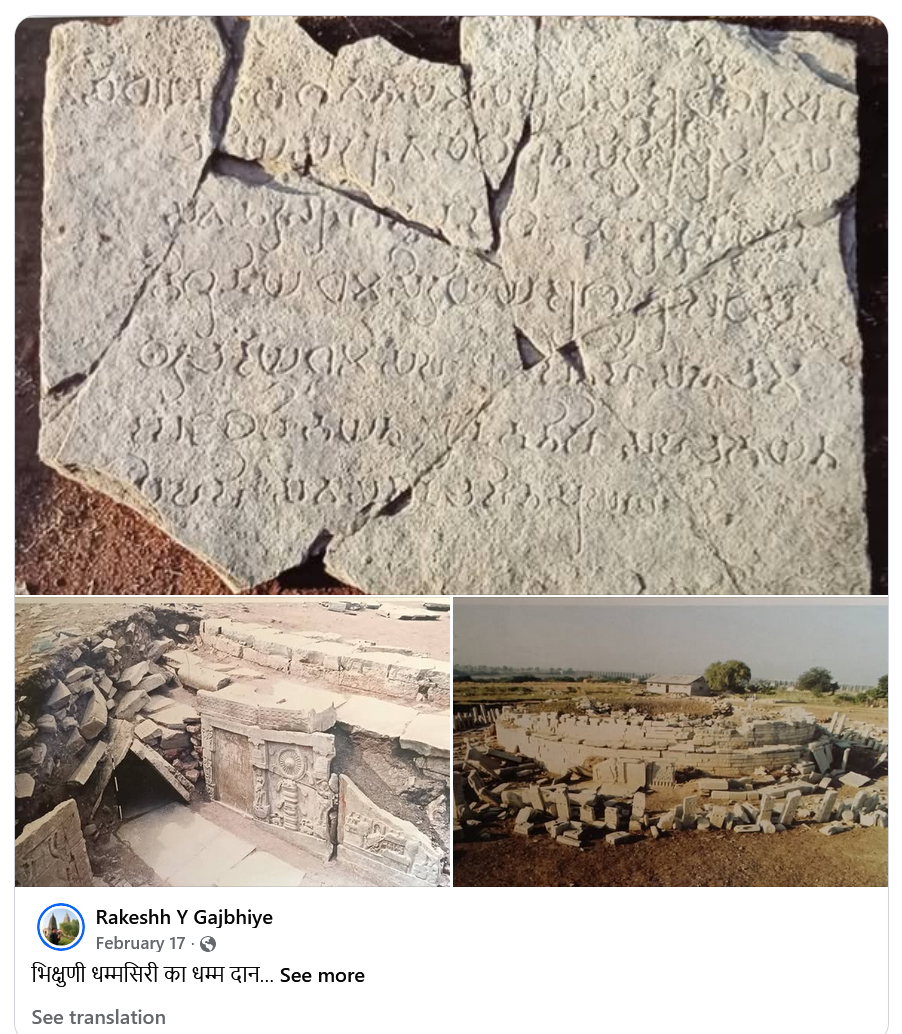
From the original post by Rakeshh Y Gajbhiye with Nag Anurak Eshin Divijata in Hindi:
"Dhamma Donation of Bhikkhunī Dhammasīrī" - whose name means the 'auspiciousness' and 'splendor' of the Dhamma
"Located in the Kalaburagi district of Karnataka state, the Kanaganahalli Stupa is a large Buddhist stupa believed to have originally been built [by the emperor Ashoka] in the third century BCE. Numerous donation inscriptions in Brahmi script have been found here, dating from the time of Emperor Ashoka to later centuries [from the 2nd century BCE to 3rd century CE].
"Like Sanchi, this site was a center of collective [Buddhist community] participation, as it records joint donations from bhikkhus and bhikkhunīs (male and female monastics), upāsakas and upāsikās (male and female lay followers), merchants, and householders.
"The six-line inscription in Prakrit language in Dhammalipa / Brahmi script engraved around the stupa reads as follows:
𑀲𑀺𑀥𑀁𑀦𑀫𑁄𑀪𑀕𑀯𑀢𑁄𑀲𑀫𑀲𑀩𑀼𑀥𑀲𑀅𑀥𑁄𑀮𑁄𑀓𑀫𑀳𑀸
𑀘𑁂𑀢𑀺𑀬𑀲𑀭𑀜𑁄𑀯𑀸𑀲𑀺𑀞𑀻𑀧𑀼𑀢𑀲 𑀲𑀺𑀭𑀺𑀧𑀼𑀮𑀼𑀫𑀸𑀯𑀻𑀲
𑀲𑀯𑀙𑀭𑁂𑁩𑁦𑁫𑀕𑀺𑀳𑀫𑀸𑀲𑀧𑀔𑁨𑀤𑀺𑁧𑁦𑀓𑁄𑀢𑀼𑀘𑀺𑀮𑀸𑀦
𑀪𑀺𑀔𑀼𑀡𑀺 𑀬𑀸𑀥𑀫𑀲𑀺𑀭𑀺𑀬𑀸𑀬𑀅𑀕𑀸𑀢𑀼𑀓𑁄𑀧𑀣𑀲
𑀣𑁂𑀭𑁄𑀘𑀤𑁂𑀬𑀥𑀫𑀲𑀳𑀫𑀸𑀢𑀸𑀧𑀺𑀢𑀺𑀳𑀺𑀲𑀳𑀘
𑀉𑀧𑀛 𑀸𑀬𑁂𑀳𑀺𑀪𑀬𑀢𑀯𑀭𑀡𑀪𑀼𑀢𑁂𑀳𑀺𑀲𑀳𑀢𑀪𑀬𑀢𑀲𑀺𑀧𑁂𑀳𑀺𑀲𑀯𑀲𑀢𑀸𑀦𑀁𑀘𑀳𑀺𑀢𑀲𑀼𑀔𑀸𑀬
Row 1: Sidhaṁ (Siddhaṁ) Namo Bhagavato Samasa Budhasa (Samma Sambuddhassa) Adholoka Mahā-
Row 2: Cetiyasa Rañño Vāsithiputasa Siri Pulumāvīsa
Row 3: Savachare (Saṃvacchare) 30 5 Giha (Gimha) Māsa Pakha (Pakkhe) 2 Di 10 Kotucilāna
Row 4: Bhikhunīyā Dhamasīrīyāya Agātuko Pathas
Row 5: Thero ca Veyadham Sahā Mātāpitihi Sahā ca
Row 6: Upajhāyehī Bhāyata (Bhadanta) Varanobhūtehi Sahā c*a Bhāyatasi pehi Sava (Sabba) Sātaṅ (Sattānaṁ) ca Hitasukhāya
"Translation:
Success! Namo Tassa Bhagavato Samma Samubuddhasa. In the 35th year of the reign of the King Vasithiputta Pulumāvī, on the 10th day of month in the second fortnight of the summer season, Kotujīlāna* Bhikkhunī Dhammasīrī (Dharmaśrī) offered the construction of a stone slab (or slabs) of the circumambulatory path of the Adhālaka Mahā Cetiya (Stupa) in conjunction with and dedicated to our Thera/Therī predecessors together with her mother and father, and her Upajjhāya Bhadanta Varanubhuti together with her revered female teachers, for the welfare and happiness of all living beings.
"King Vasishthiputra Sri Pulumavi belonged to the [2nd century] CE Satavahana Dynasty and was the son of Gautamiputra Satakarni. During his reign, Buddhism was patronized and flourished. The inscription clearly states that the Bhikkhunī Dhammasīrī commissioned this construction in the thirty-fifth year of his reign.
"This inscription is an important testimony to the active role of bhikkhunīs in ancient [Andhra, in South] India and their contribution to Buddhist architecture.
"Our heartfelt 'anumodana' with gratitude to Bhikkhunī Dhammasīrī for her donation."
✍️✍️✍️ Rakeshh Y Gajbhiye with Nag Anurak Eshin Divijata in Hindi, based on Dao Siam's Thai original. English translation with the assistance of Google Translate for Thai and Meta Translate for Hindi.
HISTORICAL COMMENTARY & DISCUSSION
⏳🪦📜 I. What this inscription shows us about the status of Bhikkhunīs at this time on the Indian mainland in the 2nd century CE, about 500 years after the Ashokan Missions period.
This inscription (and others with it at the Kanaganahalli Mahā Stupa) clearly show:
the existence of Bhikkhunīs in India in the 2nd 500-year period of the Buddha Sāsana
the spread of Bhikkhunī Sangha to the Andhra region of South India
that Bhikkhunīs in this time and place had male preceptors (upajjhāya, upadhyāya).
There is more of interest and insight on this topic which will be revealed with the publication of further inscriptions from this site.
🗺️🧭⛰️ II. Where was Bhikkhunī Dhammasīrī from?
*While the text we received has 𑀓𑁄𑀢𑀼𑀘𑀺𑀮𑀸𑀦 "Kotujilana," other scholars (such as Tournier 2020, 2022) have read this as "Korukulana," translating this as "of the Korukullas," and identified this with the location of Mount Kurukulla in Lāṭa in present-day Southern Gujarat. Xuanzang’s census of monasteries in Gujarat suggests that the monastic community at Kurukulla in Gujarat was associated with one of the largest Buddhist communities of his day in the Indian subcontinent, which particularly dominated the Western part of India, with Valabhī in Surāṣṭra (Kathiawar) being one of their major centres.
There are other male teachers (ācariyas) recorded in inscriptions at Kanaganahalli who also appear to be from the same monastic community in the same area, "male ‘teachers from Korugāla,’ 'korugālakāna acariana,'" including the noted teachers of another prominent bhikkhunī contributor, Bhikkhunĩ Dhammarakkhitā.
As Tournier (2020) says:
"The evidence [he has] considered...strengthens the possibility...that Mount Kurukulla and the [the Buddhist monastic community] lineage attached to it were situated in the south of present-day Gujarat. The establishment of the Kaurukullas...[in] a region likely subsumed under Aparānta which, under Gotamīputta Sātakaññi (c. 60–84) and his successor Vāsiṭṭhīputta Siri-Puḷumāvi (c. 85–125), belonged to the Sātavāhana domain.93 This territorial unification, during the heyday of the Sātavāhanas, would have facilitated the circulation of monks and nuns belonging to [Bhikkhunī] Dhammasirī’s lineage along the dakṣiñāpatha [Southern Trade Route], and their involvement at the Adhālaka-Mahācetiya [great stupa here.]"
🪔🪙🪷 III. The name of the stupa
I would like to note that in this photograph, the portion of the inscription that shows the name of the Kanaganahalli Mahā Stupa is not clear.
It has been transcribed here in digital Dhammalipa / Brahmi - script as "𑀅𑀥𑁄𑀮𑁄𑀓𑀫𑀳𑀸𑀘𑁂𑀢𑀺𑀬", that is, "Adholoka Maha Cetiya," as we see at the end of line 1 and beginning of line 2 above. Indeed in popular parlance in India, it is being called the "Adholoka" mahācetiya. For this reason, it is commonly called the "Great Stupa of the Netherworlds" or "Great Cetiya of the Underworld," with "Adha" reasonably being read as "Adha" or "Andhra" or "under," but which also means "southern" on a map from the perspective of Northerners. "Loka" means "world" or "realm" - thus the literal translation "underworld."
However, there are other inscriptions from this same site that have been read by scholars and transliterated as "Adhālaka Mahācetiya" and the "Adhālaka Mahācetiya Dhammarājika."
While "Adha" likely still means "Andhra,' I would like to suggest that "ālaka" might have been misread as "āloka" as suggested by Dao Siam, in which case the stupa might have been named something like "the Southern Light" or "Light of Andhra."
I personally consider it even more likely that "Ālaka" refers to a legendary city of the Yakkhas, similar to the co-contemporary Amarāvatī Stupa, also of Andhra, which was named for a legendary city of Indra. Many of these ancient stupas were associate with powerful male Yakkhas (Yakshas) and female Yakkhis (Yakshis), whose life size statues we may still see guarding them. The Kanaganahalli Mahā Stupa is no exception, and is associated with a powerful female Yakkhi.🎗
Historians associate the mythical Nāgas and Yakkhas with tribal peoples; the Yakkhas were known for cannibalism. Buddhism transformed the practices of cannibalism and human sacrifice wherever it spread, and alternative forms of sacrificial offerings and propitiation were developed, up to and including making offerings of food, lotuses, gold, robes and monastic requisites, and money, as well as, increasingly, offering stone carvings and stupas as well as stupa adornments - rather than animal sacrifice or other ritual practices. And offering children for temporary monastic ordination and training, rather than as human child sacrifice to Yakkhas and Yakkhis.
🎗I will include an image and link in the comments to the remarkable female Yakkhi "Yakshi Shri" of Kanaganahalli.
In the case of the Bhikkhunī Dhammasīrī, she was participating in this established Buddhist tradition of the transformation of offerings, in which her family and ancestors, as well as her monastic teachers and preceptors were all made a part; and rather than making her offerings for the sake of wealth or power or prodigy - she made them "dedicated to the benefit and happiness of all living beings."
We need a proper study of the inscriptions to clarify the name of this incredible ancient mahāstupa, from which we can learn so much.
Meanwhile, i sincerely join the original author in rejoicing with Bhikkhunī Dhammasīrī in her compassionate Dhamma gift of the great stupa's stone walking path as place of devotional walking meditation offered to the whole Buddhist community as a mindful, peaceful and joyful way to make merit and develop oneself in worthy qualities through remembering the Buddha, contemplating the Dhamma, and practicing mindfulness and devotion, individually and as a Sangha together.
Sādhu sādhu sādhu ~ anumodāmī
🙏 Tathālokā Therī at Dhammadharini
with gratitude for Dhammadharini Support Foundation and all the supporters of Dhammadharini for the ability to study, learn, meditate and share Dhamma offerings.
Postscripts
This post is important to consider for all those who have learned that the Bhikkhuni Sangha disappeared in India at the end of the first 500 year period of the Buddha Sāsana - as the historical bhikkhuni of the inscription here and her Bhikkhuni Sangha peers in South India also recorded at that stupa lived after the first 500 year period.
Discussed in this post is the topic of Yakkhas (Yakshas) and Yakkhis (Yakshis) and the transformation of types of offerings in Early and Middle period Buddhism from various kinds of earlier-popular animal and human sacrifice to much more benevolent and harmless types of offerings and merit making.
A photo of the of the great stone carving of 'Yakshi Sri' of Kanaganahalli from the Karnataka Travels blogspot (there is a copy of her in the museum)
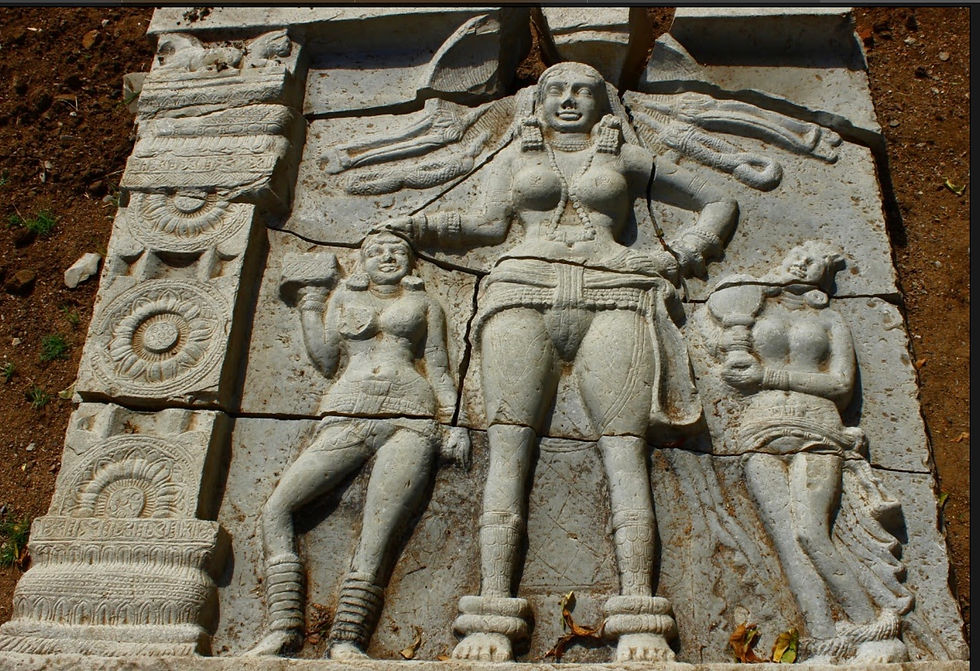
Some bloggers and YouTubers have said this Kanaganahalli carving depicts the Buddha's wife Yasodharā, but i personally agree with those who have identified her as a Yakshi.
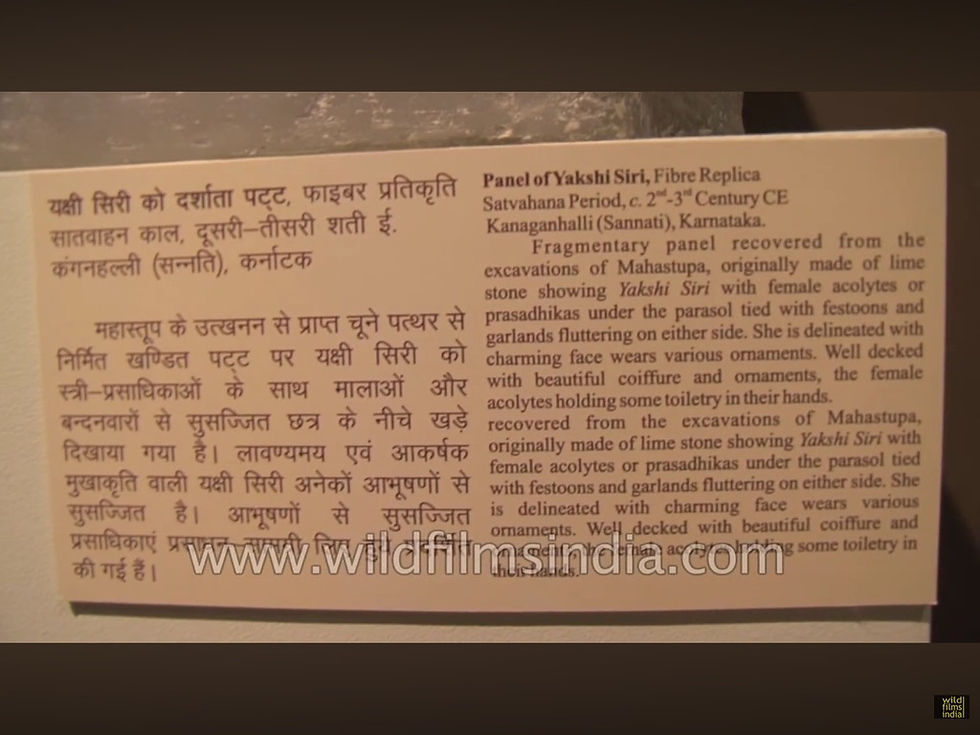
This is so impressive! Learning more...
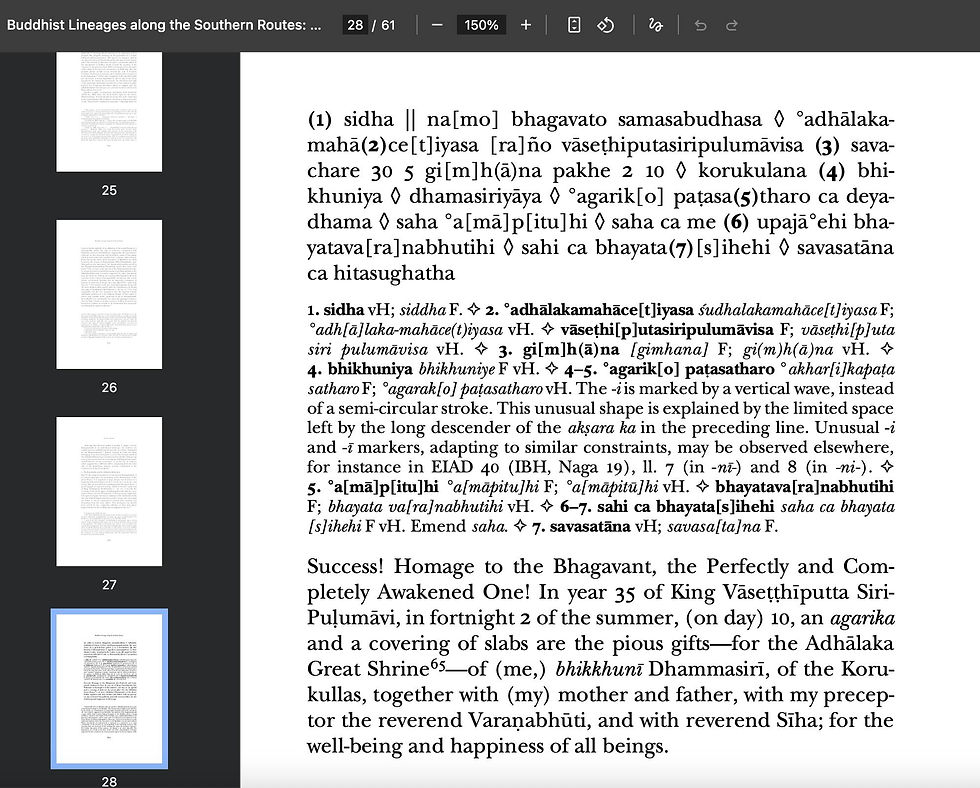
"Buddhist Lineages along the Southern Routes: On Two nikāyas Active at Kanaganahalli under the Sātavāhanas" by Vincent Tournier (2020)
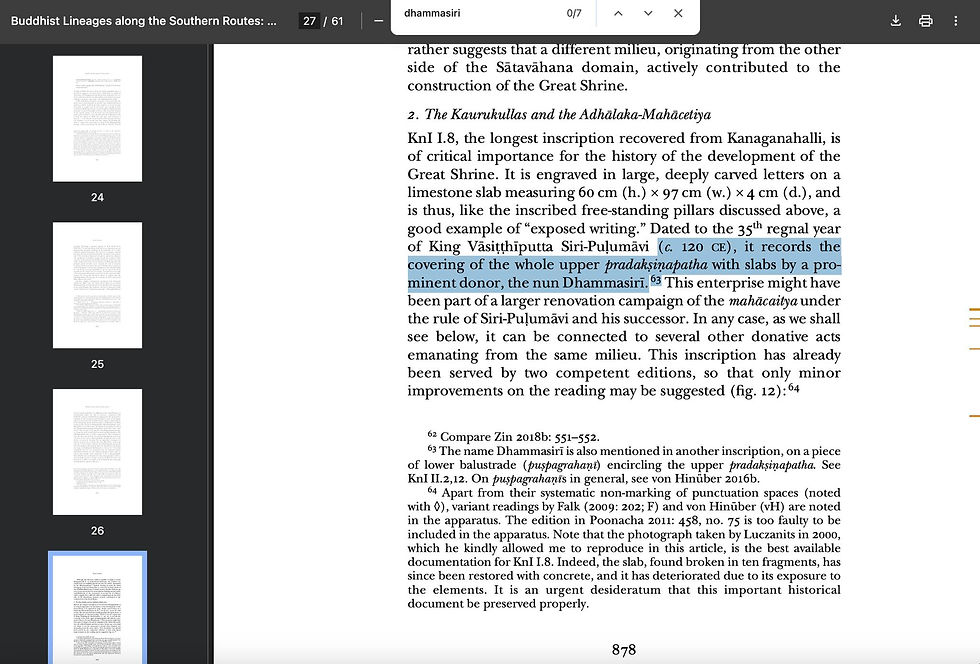
The reading of the inscription by Tournier (2020)
"Success! Homage to the Bhagavant, the Perfectly and Completely Awakened One! In year 35 of King Vāseṭṭhīputta Siri Puḷumāvi, in fortnight 2 of the summer, (on day) 10, an agarika and a covering of slabs are the pious gifts—for the Adhālaka Great Shrine65—of (me,) bhikkhunī Dhammasirī, of the Korukullas, together with (my) mother and father, with my preceptor the reverend Varañabhūti, and with reverend Sīha; for the well-being and happiness of all beings."
Noting Tournier, probably rightly, identifies the Bhadanta Varañabhūti as Bhikkhunī Dhammāsīrī preceptor (upajjhāya) and Bhadanta Sīha as her teacher (ācariya). The foremost reason that i say "probably rightly" is because Bhadanta Sīha is also identified by other donative inscriptions at the Kanaganahalli mahā stupa.