


Tathālokā Therī
October 3, 2026
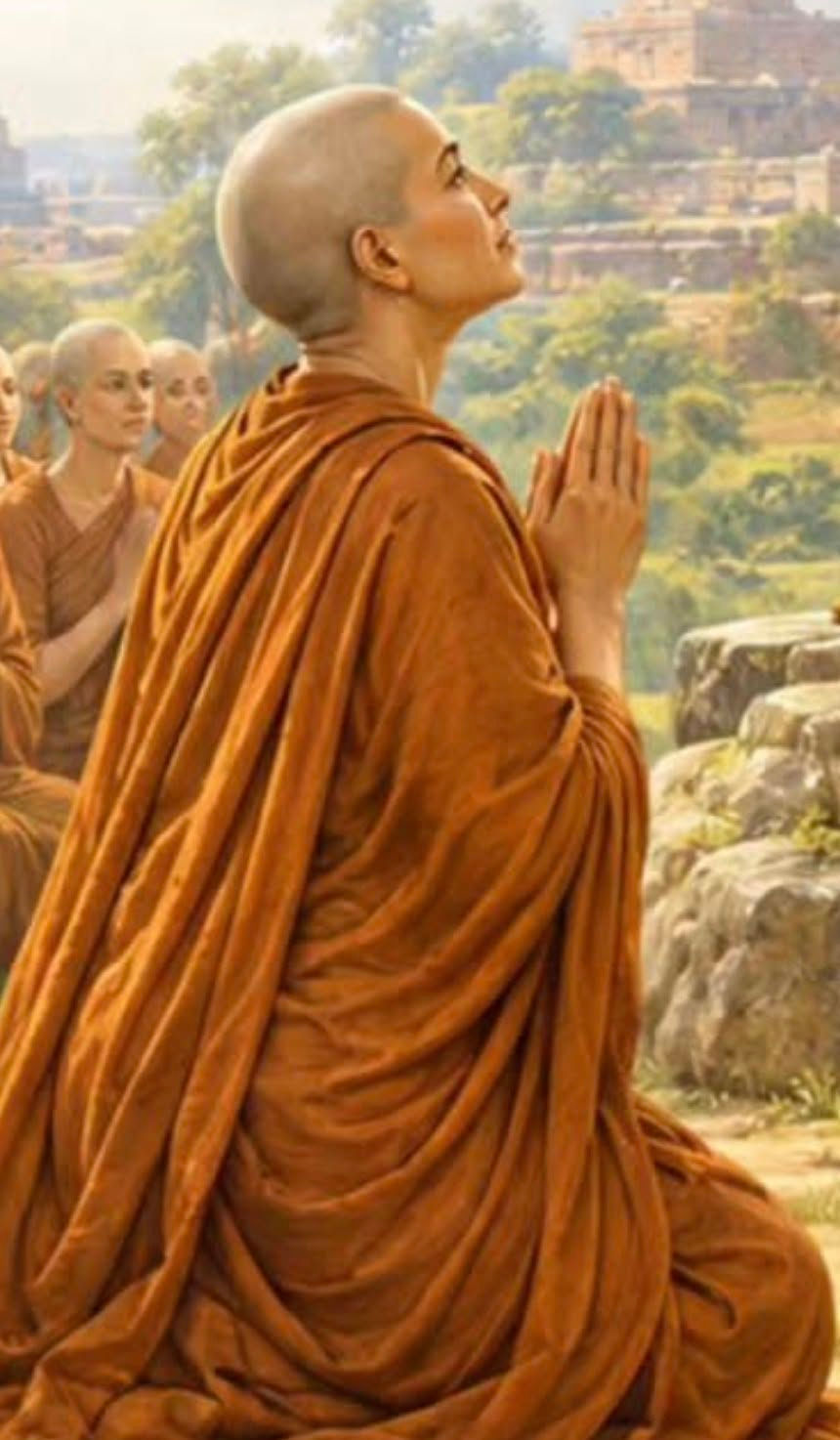
🪔🏵️🪔 The Buddha's Founding Vision & Mission Statement 🪔🏵️🪔
Special post offered on Mahāpajāpatī Gotamī's Arahatship Day
"Bhante, these words were spoken by the Blessed One [when newly-awakened at Bodhgaya]:
"'...I will not attain final Parinibbāna as long as my Bhikkhunī disciples, have not become skilled, disciplined, confident, learned, bearers of the Dhamma, practicing in accordance with the Dhamma, practicing the proper practice, and habitually practicing in conformity with the Dhamma; as long as they will not, having learned their own Teacher's doctrine, declare it, teach it, make it known, establish it, reveal it, analyze it, and make it clear; and as long as they will not, having thoroughly refuted an arisen opposing doctrine rightfully, teach the wondrous Dhamma.’"[1]
—a quote of the Buddha, Mahāparinibbāna Sutta
The scene:
This is a repeated recollection of the Buddha's founding vision and mission statement of intention pronounced by him in Bodhgaya, before setting forth to the Deer Park in Varanasi's Isipatthana to turn the wheel of the Dhamma.
The reason:
Mārā has suggested that the newly-awakened Buddha pass into Mahāparinibbāna there, without even teaching the Dhamma he has realized. Before beginning to teach, before setting the Dhamma wheel into motion, the Buddha states his vision and mission' what he intends to accomplish, and has determined he will accomplish, before entering Mahāparinibbāna. It is only decades later, after affirming that he has fulfilled his founding vision and mission, that he 'relinquishes the life force' and begins his final teachings and journey.
This founding vision and mission statement of intention of the Buddha's is repeated four times in the flow of the dialogue of the Mahāparinibbāna Sutta, making it memorable and hard to forget, when and if the text is read or recited in full.
However, readers and listenings almost always encounter an abbreviated version, in which only the Buddha's first and identical statement is recited with regards to Bhikkhus. Thus frequently leading to the elision, under "pe" - "..." or "etc.," of the Buddha's explicit and affirmed founding vision and mission statement with regards to establishing such a well-knowledgeable, well-practiced, well-experienced, and well-capable Bhikkhunī Sangha of disciples.

This leads to widespread, even rampant, speculation among contemporary writers and readers that the Buddha was somehow "convinced," it seems perhaps unwillingly or against his better judgement, to agree to found his Bhikkhunī Sangha. Some allude that the Buddha was manipulated - and ask startlingly: "how could this be possible?"
These allusions cast doubt in the minds of the readers and hearers, and sometimes not only doubt, but also confusion and even fear. "If the Buddha was fully awakened, how could he have been 'convinced?" they ask.
In this way, such allusions spread confusion, doubt, and fear. And they strike at confidence of 'those of tender faith' in the complete awakening and awakened wisdom of the Buddha. This is no small matter, to guess the mind of the Buddha, and represent it. Or misrepresent it.
However, these paragraphs of the Mahāparinibbāna Sutta clearly speak differently—by direct inference—to the Buddha's long standing intention and determination, as part of his vision, mission, and adhiṭṭhāna or resolution to have a Fourfold Community of such knowledgeable and experienced disciples who are capable of Teaching the Saddhamma, and who are—explicitly—capable of refuting wrong views that may arise in the present or future. It is repeated, and it is clear.
Bhikkhus and Bhikkhunīs, Upāsakas and Upāsikās: It is in these wise and capable disciples—of all four of these stations, including Bhikkhunīs, and including well-practiced and realized Upāsakas and Upāsikās—that the Buddha knowingly and intentionally invests his Sāsana: his Teaching and his Dispensation.
These are the Blessed One's disciples and heirs - the Sāvaka Sangha who are "worthy of gifts, worthy of offerings, worthy of hospitality, worthy of reverential salutations: an incomparable field of merit for the world."
Above, i wrote:
"This is no small matter, to guess the mind of the Buddha, and represent it. Or misrepresent it".
The Buddha visited a mango grove in Nāḷandā with Sāriputta, nearby the hometown of this, his great bhikkhu disciple foremost in wisdom, Sāriputta Thero. The Buddha asks Sāriputta if he is able to know the Buddha's mind. One of the super-normal abilities of the arahants was the ability to be able to encompass and know the minds of others.
Sāriputta had just made a strong assertion:
"I have such confidence in the Buddha that I believe there’s no other samana or brahmin, ascetic or priest—whether past, future, or present—whose direct knowledge is superior to the Buddha when it comes to awakening.”
The Buddha replied, asking:
"What about all the perfected ones, the fully awakened Buddhas who lived in the past? Have you encompassed their minds to know that those Buddhas had such ethics, or such qualities, or such wisdom, or such meditation, or such freedom?” "...and the future?"
And: “And what about me, the perfected one, the fully awakened Buddha at present? Have you encompassed my mind?"
In each case, the great Sāriputta Thero replies:
“No hetaṁ, bhante”—"No, sir!"—"I don’t encompass the minds of Buddhas." "But still I understand this by inference from the Dhamma."
“Na kho me, bhante, atītānāgatapaccuppannesu arahantesu sammāsambuddhesu cetopariyañāṇaṁ atthi, api ca me dhammanvayo vidito."
This "Dhammanvayo vidito" is important here.
Ñāṇa (insight knowledge) includes right view, sammādiṭṭhi, through seeing and knowing for oneself, as well as, with "Dhamme ñāṇaṃ, Dhamma-anvaye," which means what is "in conformity with the Dhamma," or "in accordance with the Dhamma;" that is, based in true insight knowledge of one's own, the ability to make inferences by extension that are in conformity with the Dhamma.
Although this seems like an expression of humility from this great disciple, it is classically known most admirably as "Sāriputta's Lion's Roar."
This is from the Nāḷandā Sutta recorded in the Pāli Connected Discourses of the Buddha (SN 47.12); in which the Buddha is recorded therein as asking Sāriputta to teach this, saying:
"Sāriputta, you should frequently speak this Exposition of the Teaching to the Bhikkhus, Bhikkhunīs, Upāsakas, and Upāsikās."
"Tasmātiha tvaṁ, sāriputta, imaṁ dhammapariyāyaṁ abhikkhaṇaṁ bhāseyyāsi bhikkhūnaṁ bhikkhunīnaṁ upāsakānaṁ upāsikānaṁ."
In fact, this exposition of the Dhamma is also found in two more suttas in the Digha Nikāya - the Long Discourses of the Buddha - the very same collection in which the Mahāparinibbāna Sutta, quoted from above, is also preserved. These are suttas meant to be taught by those spreading the Buddha's teachings far and wide.
SUTTA STUDY LEARNING SUMMARY
The Buddha's founding vision & mission statement, and the true humility and the lion's roar of the confidence of the wisest of his fully-awakened disciples.
. . .
🌗✨ Today. The Arahatship of Mahāpajāpatī Gotamī on this Third Quarter Half Moon (Aṭṭhami) Uposatha, of which today is the anniversary, proved and fulfilled the Buddha's one week prior assertion and affirmation in the Gotamī Sutta that:
"...Women are capable of fully realizing for themselves the fruits of stream-entry, the fruits of once-return, the fruits of non-return, and the fruits of arahatship, when/if they have 'left home life' and 'gone forth' [as bhikkhunīs] in the Tathāgatha's well-taught Dhamma & Vinaya."
'"...Mātugāmo tathāgatappavedite dhammavinaye agārasmā anagāriyaṁ pabbajitvā sotāpattiphalampi sakadāgāmiphalampi anāgāmiphalampi arahattaphalampi sacchikātun”ti.'
. . .
To all the Bhikkhunīs out there:
🙏 May we, as the Blessed one's vision and mission and affirmation was for his Bhikkhunī disciples and heirs, make our greatest efforts to become:
"skilled, disciplined, confident, learned, bearers of the Dhamma, practicing in accordance with the Dhamma, practicing the proper practice, and habitually practicing in conformity with the Dhamma; and having learned our own Teacher's Dhamma, may we declare it, teach it, make it known, establish it, reveal it, analyze it, and make it clear; and may we, having thoroughly refuted any arisen opposing doctrines rightfully, may we teach the wondrous Dhamma."🙏
Such that we and others will say:
"Now it is good to see such arahants!"
"'Sādhu kho pana tathārūpānaṃ arahataṃ dassanaṃ hotī!’ti."
. . .
To all the Bhikkhus, Upāsakas, and Upāsikās out there:
May we make our best efforts to uplift, encourage, moralize, and support the Bhikkhunīs to be supported to fully realize and manifest the Buddha's vision, as if this were an essential component of our Teacher, our Blessed One's founding vision and mission. And may we ourselves live likewise.
🏵️🏵️🏵️ Sādhu sādhu sādhu! 🙏🙏🙏 Tadyatha! 🏵️🏵️🏵️
✍️ Tathālokā Therī, at Dhammadharini with the Bhikkhunī Saṅgha
bowing in gratitude to the Buddha, to his founding mission & vision, to his turning the wheel of the Dhamma, and to all the great arahantī bhikkhunī therīs, and all 'Buddhānubuddhaṁ' - who have realized awakening in the wake of the Awakened One.
Honoring Women in Dhamma
📖 1. ‘‘Bhāsitā kho panesā, bhante, bhagavatā vācā – ‘na tāvāhaṃ, pāpima, parinibbāyissāmi, yāva me bhikkhuniyo na sāvikā bhavissanti viyattā vinītā visāradā bahussutā dhammadharā dhammānudhammappaṭipannā sāmīcippaṭipannā anudhammacāriniyo, sakaṃ ācariyakaṃ uggahetvā ācikkhissanti desessanti paññapessanti paṭṭhapessanti vivarissanti vibhajissanti uttānīkarissanti, uppannaṃ parappavādaṃ sahadhammena suniggahitaṃ niggahetvā sappāṭihāriyaṃ dhammaṃ desessantī’ti."
—Mārayācanakathā 391, Mahāparinibbāna Suttaṁ, Dighanikāya Pāli (www.opentipitaka.org)
. . .
🖼 🎨 AI images here are shared with credit, kudos, and blessings to Ayye Sakya Dhammadinna from her commemorative post for this lunar founding anniversary of the Buddha's Bhikkhuni Sangha and the Fourfold Assembly of the Buddha


